
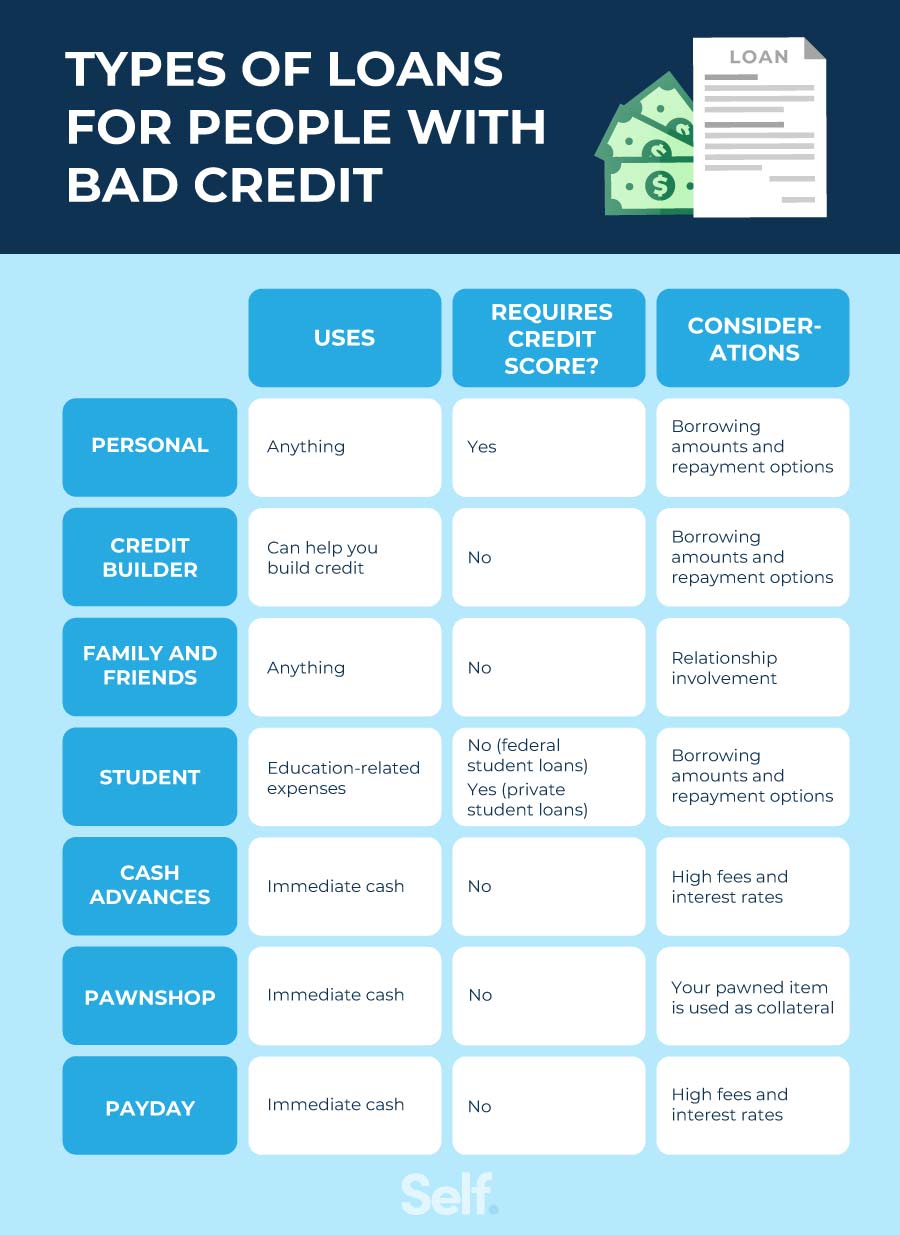
You can get a personal loan even with bad credit. You just have to accept that you’ll likely face higher interest rates and tougher approval requirements. While a low score makes things harder, there are plenty of specialized lenders that work with people who don’t meet traditional credit thresholds.
The Mechanics of Subprime Lending Markets
Lending is basically a math problem based on risk and reward. When a lender sees a credit score below 580, they see a higher statistical chance that you might default. To cover that risk, they charge you more for the money. It isn’t a personal judgment on your character; it’s just how banks calculate risk.
A lot of people think a low score slams every door shut, but that’s not the case. There’s a whole sector of the industry for “subprime” or “near-prime” borrowers. These lenders often care more about your steady income or employment history than the specific number on your credit report.
You’ll probably see different options depending on what you need to bridge a financial gap. Some lenders offer unsecured loans, meaning you don’t have to put up your car or house as collateral. Others might ask for a co-signer to lower their risk. It’s a trade-off between getting the cash quickly and the total cost of the debt.
When you start shopping around, some platforms act as middlemen. For example, Acorn Finance allows you to find and compare the best personal loans for bad credit without impacting your score during the initial quote phase. This matters because every “hard inquiry” can shave a few points off your score, which is the last thing you want when you’re already struggling.
Understanding the Impact of Inquiries
A soft inquiry is a quick check that won’t hurt your score, and most modern comparison tools use these. A hard inquiry happens when you actually apply for the loan. If you apply at five different banks in one afternoon, you might see a temporary dip in your credit profile.
It’s smarter to use a comparison tool that aggregates rates first. This lets you see the “personalized rates” mentioned by many providers before you commit to a formal application. It keeps your credit profile cleaner while you hunt for the best terms.
Comparing Current Lender Profiles and Terms
Not all lenders are the same. You’ll find large national banks with strict, automated rules, and then there are fintech companies that use alternative data to see if you can pay them back. The “best” lender depends entirely on whether you need a small amount of cash fast or a large sum to consolidate debt.
The current market is pretty diverse. LendingTree reviews over 40 lenders to help people find options even when their scores are under 580. This variety helps because a lender that’s great for a $5,000 debt consolidation might be terrible for a $1,000 emergency loan.
People often get confused by “no minimum score” claims. Some lenders really do have no minimum, but they make up for it with much higher APRs. You have to decide: is it better to pay 30% interest for a year, or wait six months to fix your credit and pay 12%? It’s a tough choice when bills are due tomorrow.
| Lender Type | Typical Target Score | Primary Benefit | Primary Drawback |
| Traditional Banks | Lowest interest rates | Hard to qualify | |
| Credit Unions | More flexible terms | Smaller loan amounts | |
| Fintech/Subprime | High approval rates | High APRs |
The Role of Loan Purpose
Lenders care why you want the money. If you’re taking a loan to consolidate high-interest credit card debt, a lender might see you as a lower risk because you’re paying off other debts. If you’re taking the money for a vacation, they view you differently. Just be honest about your purpose on the application.
Debt consolidation is the most common reason people take out these loans. One larger loan with a fixed monthly payment can simplify your finances. But if you don’t stop using the credit cards you just paid off, you’ll end up in a deeper hole. It’s a trap a lot of people fall into.
The Hidden Costs of High-Interest Borrowing
When you have bad credit, the APR (Annual Percentage Rate) is the most important number. Don’t just look at the monthly payment. A low monthly payment usually means a much longer loan term, meaning you’ll pay thousands more in interest over time. You might end up paying for a $5,000 loan for three years instead of one.
Watch out for origination fees. These are upfront costs taken out of your loan before you get it. If you ask for $5,000 and there’s a 5% origination fee, you only get $4,750, but you still owe interest on the full $5,000. It’s a way for lenders to pad their profits.
Late fees are another way to lose control of your budget. When things are already tight, one missed payment can trigger a cascade of penalties. This can lead to a debt cycle that is hard to break. You might want to look into goodknight credit.com to understand how these late payments will affect your long-term recovery efforts.
The Trap of Predatory Lending
There is a big difference between a high-interest subprime lender and a predatory lender. Predatory lenders often use aggressive tactics or include terms that make it nearly impossible to pay off the principal. Always read the fine print. If a lender won’t provide a clear repayment schedule in writing, walk away. No “deal” is worth a lifetime of debt.
Payday loans are the classic example of predatory lending. They aren’t personal loans; they’re short-term, high-interest products that often have APRs in the triple digits. A personal loan, even with bad credit, is a much safer and more regulated tool than a payday loan.
Strategic Steps to Improve Your Standing
Borrowing money with bad credit should be a temporary fix, not a lifestyle. The goal is to use the loan to stabilize things so your next loan has much better terms. If you use a personal loan to consolidate debt, your credit utilization ratio improves, which can boost your score in a few months.
Consistency is everything. Automating your payments ensures you never miss a due date. Even if you can only pay the minimum on everything else, you need to pay this personal loan on time, every single time. That’s the fastest way to show credit bureaus that your behavior has changed.
You can also check your reports for errors. It’s surprisingly common to find mistakes, old debts that were already paid, or accounts that don’t belong to you. Disputing these can give your score a boost without you having to do much else. It’s a simple, free step that people often overlook when they’re in a rush to find a lender.
Managing bad credit requires a shift in how you view debt. It’s a tool, like a hammer; it can be used to build something or to break things. If you use it carefully, with a clear plan and a focus on long-term credit health, you can move past this phase.